Explore EV Technology & Its Diverse Vehicle Types
Electric Vehicle Technology is becoming more significant as the globe transitions to sustainable transportation. Electric vehicles (EVs), offer a sustainable and environmentally friendly alternative to traditional gasoline-powered cars, and are revolutionising the transportation industry.
Understanding the different kinds of electric vehicles and how they work is crucial for anyone wanting to build a strong foundation in this rapidly evolving market.
Table Of Content
What is an Electric Vehicle (EV)?
Advantages of Electric Vehicles
Different Types of EV Vehicles and Their Features
Career Opportunities in EV Technology
Wrapping up
Frequently Asked Questions
What is an Electric Vehicle (EV)?
Advantages of Electric Vehicles
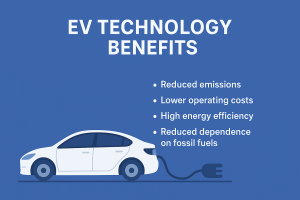
- Electric vehicles have a wide range of benefits to make them the smart choice for commuters in modern times. The biggest advantage of an EV vehicle is that running it is way cheaper compared to any other car moving on either petrol or diesel. With improvements in EV technologies, drivers can enjoy better efficiency and reliability than ever.
- EVs are also more eco-friendly, emitting much fewer gases than traditional engines. Many consumers like the different types of EV vehicle options because such cars mean cleaner air and a greener planet. With further development in EV technology, it will become even more of an advantage in terms of sustainability.
- The other critical advantage of the EV vehicle is driving smoothness via instant torque. Be it examining different varieties of EV vehicles or comparing their performance, electric motors can offer quicker acceleration without lag in the engine. This smoothness is one of the strongest demonstrations of modern EV technology.
- Another important reason is that EVs reduce noise pollution, creating quieter and more comfortable cities. Every EV car runs very quietly, improving city life. This quiet performance is another reason many people prefer advanced EV technology when choosing between different types of EV vehicles.
Different Types of EV Vehicles and Their Features
1. Hybrid Electric Vehicle (HEV)
Hybrid electric vehicles (HEVs) combine a conventional internal combustion engine (ICE) with an electric motor and battery pack, resulting in reduced fuel consumption. HEVs utilise the electric motor to power the car during inefficient ICE conditions, like accelerating from a stop. Conversely, the ICE unit is prioritised during more efficient situations, such as highway cruising.
HEVs are similar to conventional ICE vehicles in terms of refuelling, as they primarily rely on traditional fuels like petrol. The battery in HEVs is automatically charged through regenerative braking, and the electric motor system activates when suitable, eliminating the need for drivers to monitor charging or plug the vehicle into power outlets.
2. Plug-in Hybrid Electric Vehicle (PHEV)
Plug-in hybrid electric vehicles (PHEVs) resemble hybrids in certain ways but have quite a few differentiating features. PHEVs frequently offer a sizable quantity of electric driving options due to their larger battery packs and more powerful electric motors.
In contrast to hybrid vehicles, PHEVs have an ICE that can be entirely shut off. The driving experience of a PHEV is similar to that of a hybrid since the battery automatically recharges, and the vehicle may swiftly switch between an internal combustion engine and electric power as needed.
In order to use the vehicles when the petrol is less or when the battery is completely charged, PHEV owners can opt to recharge their vehicles with both petrol and electricity.
3. Battery Electric Vehicle (BEV)
Battery electric vehicles (BEVs) are fully electric automobiles powered solely by electricity. The usage of electric motors that are driven by onboard battery packs means that these vehicles don’t even require internal combustion engines (ICEs).
Compared to hybrid and plug-in hybrid electric vehicles, BEVs are more powerful and have bigger batteries when measured in kilowatt-hours (kWh).
To drive a BEV, it requires a charge. This can be accomplished through various means such as home chargers, fast charging stations or by harnessing energy through regenerative braking. These charging options allow BEV owners to conveniently replenish their battery and extend their driving range.
4. Mild-hybrid Electric Vehicles (MHEV)
The mild hybrid powertrain, also referred to as MHEV, combines a combustion engine with an electric motor. The MHEV system serves multiple purposes, including starting the engine and assisting with braking or deceleration to recover energy.
This recovered energy is stored in a 48V battery and can be utilised to provide additional power to the combustion engine during acceleration, enhancing overall performance. The MHEV technology optimises fuel efficiency and reduces emissions by intelligently utilising electric power in conjunction with the combustion engine.
5. Fuel Cell Electric Vehicles (FCEV)
Fuel cell electric vehicles (FCEVs) operate by utilising hydrogen as their fuel source. These vehicles offer several advantages over traditional internal combustion engine vehicles. FCEVs are highly efficient, resulting in better energy utilisation.
Additionally, they produce zero harmful tailpipe emissions, with their only byproducts being water vapour and warm air. This environmentally friendly characteristic makes FCEVs a promising solution for reducing air pollution and mitigating climate change.
By harnessing the power of hydrogen, FCEVs offer a clean and sustainable transportation option for a greener future.
Career Opportunities in EV Technology
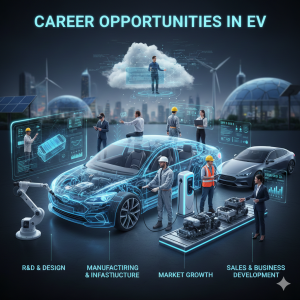
The professionals who know the types of EV vehicle, like HEVs, PHEVs, BEVs, and FCEVs, therefore have an edge because industries need talent capable of working across diverse electric mobility systems. As more brands invest in large-scale manufacturing of EVs, opportunities are growing fast in research, testing, thermal management, battery technology, and power electronics.
This in-depth insight into EV technology will open various high-growth and future-ready opportunities within the global automotive industry.
Wrapping up
In order to embrace the developing field of Electric Vehicle technology, it is essential to comprehend the types of electric vehicles and how they operate. Each form of electric car, including plug-in hybrid vehicles (PHEVs) and hybrid electric vehicles (HEVs), has its own advantages.
To gain in-depth knowledge and industry-oriented insights in the field of EV technology, the IIT Delhi has designed an Advanced Programme in Electric Vehicle (EV) Technology powered by Jaro Education is an excellent choice. This programme is developed to specifically address the training and development demands of recent graduates and working professionals in the age of Industry 4.0. Giving participants the knowledge, abilities, and skill set needed in the field of e-mobility is the aim of this broad programme.
By registering for this programme, aspiring professionals can hone their skills and gain a competitive edge in this ever-growing industry.
Frequently Asked Questions
The future of EV technology is very promising, as advancements in battery performance, charging speeds, and renewable integration continue to accelerate. While global investments are on the rise, the number of options for electric vehicles will further increase across all segments. As cities shift toward cleaner mobility, EV technology will reshape the way transportation operates worldwide and reduce carbon emissions.